Peptides of London
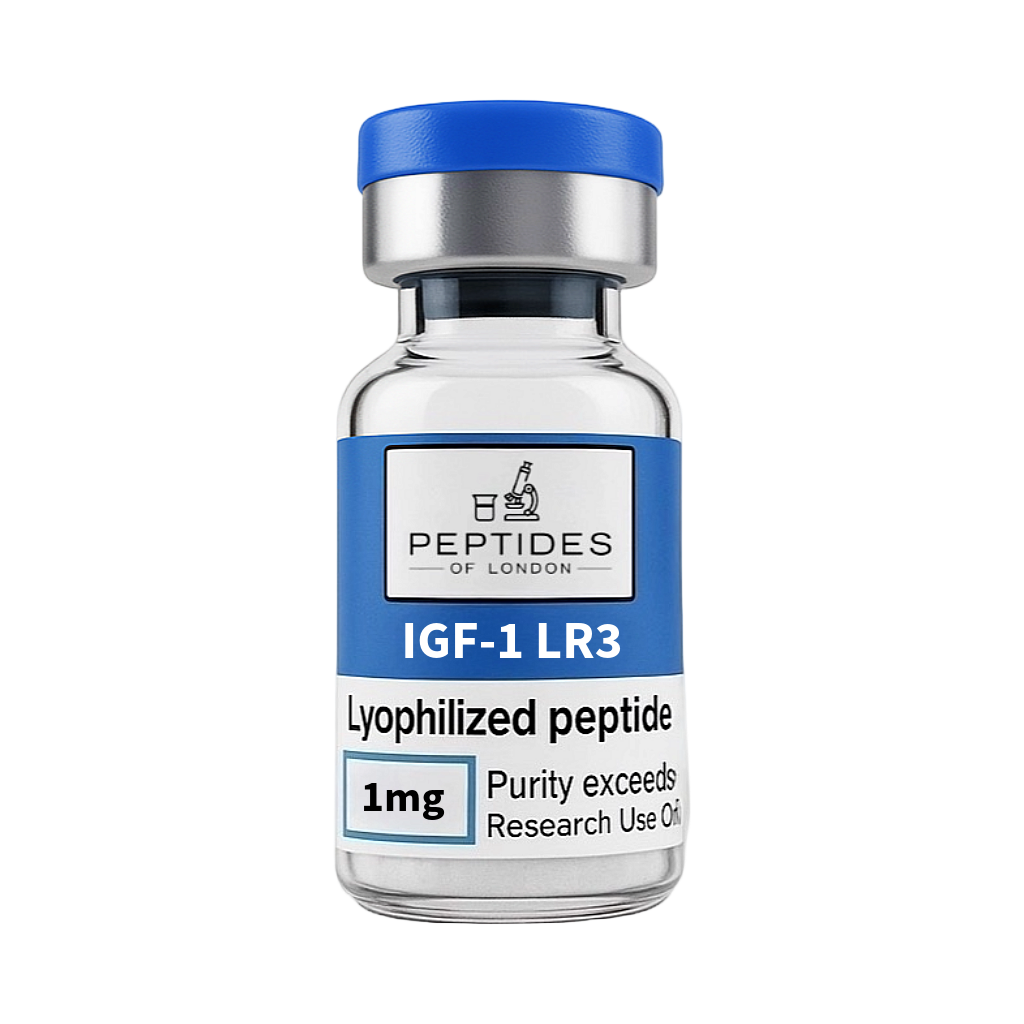
IGF-1 LR3 1mg
IGF-1 LR3 1mg
Couldn't load pickup availability
IGF-1 LR3 1mg – Ultra-Pure Recombinant Growth-Factor Analogue for Advanced Research
IGF-1 LR3 (Long Arg³ Insulin-Like Growth Factor-1) is a recombinant 83-amino-acid analogue of IGF-1 engineered for enhanced stability and extended activity in controlled laboratory environments. Designed by incorporating an arginine substitution at position 3 and a 13-residue N-terminal extension, IGF-1 LR3 exhibits reduced affinity for IGF-binding proteins (IGFBPs), enabling more sustained activation of IGF-1 receptor–mediated signalling pathways in vitro.
Widely utilised across UK and USA research laboratories / institutions, IGF-1 LR3 is a preferred model molecule for investigating growth-factor signalling—including PI3K/Akt, ERK/MAPK and protein-synthesis cascades—and is frequently compared to shortened analogues such as IGF-1 DES within mechanistic studies.
⚙️
Peptide Specifications
-
Synonyms / Also Known As:
• IGF-1 LR3
• Long R3 IGF-1
• Long Arg³ IGF-1
• LR3 IGF-1
• IGF-1 Long R3
• Recombinant Long Arg3 IGF-1 - Sequence: 83-amino-acid IGF-1 analogue with Arg³ substitution + N-terminal extension
- Molecular Formula: C₄₀₀H₆₂₅N₁₁₁O₁₁₅S₉
- Molecular Weight: ~9117.5 g/mol (≈9.1 kDa)
- Appearance: White to off-white lyophilised powder
- Purity: ≥99% (HPLC verified)
- Solubility: Soluble in bacterostatic water or suitable aqueous buffers for laboratory use only
-
Storage:
• Lyophilised: 2–8°C (short term) / –20°C or below (long term)
• Reconstituted: store refrigerated; minimise freeze–thaw cycles - Packaging: 1mg research-grade lyophilised powder in a glass vial, free from additives
🧪
Scientific Insight & Synergistic Research
IGF-1 Receptor Activation & Growth-Factor Signalling
IGF-1 LR3 exhibits strong agonist activity at the IGF-1 receptor (IGF1R) and is widely used in mechanistic studies involving PI3K/Akt, ERK/MAPK, cellular proliferation, metabolic regulation, and protein-synthesis pathways in mammalian cell systems.
Reduced IGFBP Affinity & Enhanced Stability
Compared with native IGF-1, the Arg³ substitution and N-terminal extension significantly reduce affinity for endogenous IGF-binding proteins. This modification results in enhanced apparent bioavailability and allows for more consistent and prolonged receptor engagement under in-vitro conditions.
Cell-Culture Applications & Media-Optimisation Research
IGF-1 LR3 is commonly employed in serum-reduced and serum-free culture systems to study:
- Growth-factor supplementation
- Cell-line performance optimisation
- Recombinant protein production
- Synergy with insulin, FGF, EGF, and other growth regulators
The molecule is also referenced in receptor-differential studies evaluating contrasts between IGF-1 LR3 and shorter analogues such as IGF-1 DES, which provide complementary insights into binding kinetics and temporal signalling profiles.
Published laboratory research consistently positions IGF-1 LR3 as a robust and dependable tool for studying IGF-1 biology, receptor dynamics, and growth-factor–regulated cellular processes within controlled preclinical environments.
🧪
For Laboratory Research Use Only
Not intended for human consumption or therapeutic application.
Share